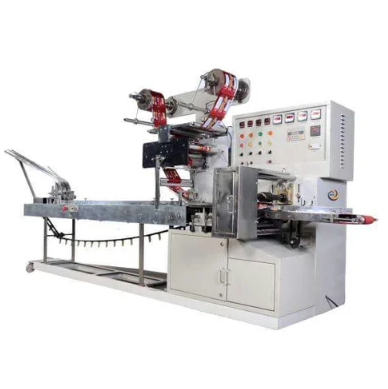
What Is a Horizontal Form Fill Seal Machine and How Does It Work?

A horizontal form fill seal machine is an automatic packaging system that forms a package from flat film, fills it with a product, and seals it all in a single continuous horizontal operation. Used across food, pharmaceutical, cosmetic, and industrial sectors, these machines replace slow and inconsistent manual packing with a faster, more reliable process. If your business needs to package products at scale while maintaining seal quality and hygiene, this machine is worth understanding.
What Is a Horizontal Form Fill Seal Machine?
A horizontal form fill seal machine, commonly called an HFFS machine, is a type of automatic packaging equipment that handles the entire packaging process from start to finish. Unlike manual or semi-automatic methods, an HFFS machine takes a roll of flat packaging film, forms it into the desired package shape, fills that package with your product, and then seals and cuts it without any manual handling in between.
The term horizontal refers to the direction of product flow through the machine. Products move along a horizontal plane, which makes this machine particularly well suited for solid, shaped, or delicate items that cannot be dropped vertically into a package without risk of damage.
HFFS machines are available in a range of sizes and configurations. Entry level models suit smaller production volumes, while high-speed industrial models can process dozens of packages per minute. Both types follow the same core operating principle.
How Does a Horizontal Form Fill Seal Machine Work?
The operation of an HFFS machine can be broken down into five clear stages:
Stage 1: Film Feeding
A roll of flat packaging film is loaded onto the machine. The film unwinds automatically and feeds through the system at a controlled, consistent speed. Tension control mechanisms keep the film aligned and prevent tearing during the process.
Stage 2: Package Forming
As the film travels through the machine, it passes through a forming station that shapes it into the required package format. Depending on the tooling installed, the machine can form pillow bags, three-side seal pouches, trays, or blister cavities. Heat and pressure assist the forming process for semi-rigid and rigid materials.
Stage 3: Product Loading
Once the package is formed, the product is placed inside. Depending on the product type and production setup, this is done by conveyor, robotic arm, volumetric filler, or direct manual placement. The machine is designed to accommodate a variety of filling methods without interrupting the packaging cycle.
Stage 4: Sealing
The filled package moves to the sealing station where the open edges are closed using heat sealing bars or ultrasonic sealing technology. Digital controls maintain precise sealing temperature and pressure, ensuring a consistent, airtight seal on every package.
See also: Best Fiber Supplements for Cats: Supporting Digestive Health Naturally
Stage 5: Cutting and Discharge
The sealed package is cut to the correct dimensions and discharged onto an output conveyor. At this point, an optional printer can apply date codes, batch numbers, or barcodes directly onto the finished package before it moves to the next stage of the production line.
What Types of Films Can an HFFS Machine Use?
One of the practical advantages of an HFFS machine is its compatibility with a wide range of packaging materials. Most machines can run:
Flexible films such as PE, PP, and multilayer laminated materials
Semi-rigid films for trays and formed cavities
Rigid PVC or PET films for blister-style packaging
Specialty films including medical-grade materials for pharmaceutical and device applications
The correct film choice depends on your product, the required shelf life, and the packaging format. A reliable machine supplier will help you identify the most suitable material for your specific application.
Who Uses Horizontal Form Fill Seal Machines?
HFFS machines are widely used across several industries:
Food manufacturers packaging biscuits, cheese, fresh meat, frozen meals, and snacks
Pharmaceutical companies sealing tablet blister packs, sterile medical kits, and device packaging
Cosmetic producers filling sachets, wipes, sample packs, and sheet masks
Industrial businesses packaging hardware components, fasteners, and retail-ready consumer goods
Any manufacturer currently relying on manual packing who needs to increase output, reduce labor dependency, and improve packaging consistency is a strong candidate for an HFFS machine.
Choosing the Right Horizontal Form Fill Seal Machine
When selecting an HFFS machine, the key factors to evaluate are your daily production volume, the type and dimensions of your product, the packaging format you require, and the film material you plan to use. Certification standards such as CE and ISO9001 are also worth confirming, as these indicate that the machine meets internationally recognized safety and quality benchmarks.
Jochamp has been manufacturing certified automatic packaging machines since 2005, supplying manufacturers across more than 50 countries. If you are considering an HFFS machine for your production line, contact the Jochamp team to discuss your requirements and receive a tailored recommendation.